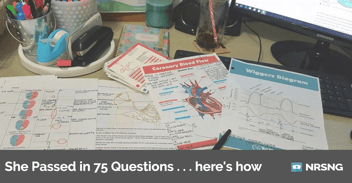



I failed my first Med-Surg exam.
Not 'did poorly.' Not 'almost passed.' FAILED. 62%.
I studied for 12 hours. I read every chapter. I highlighted everything important (which turned out to be... everything). And I still failed.
That's when I realized something: I was studying wrong.
So I completely changed my approach. And you know what? I went from failing to consistently scoring in the high 80s and 90s. Not because I suddenly got smarter. But because I finally figured out how nursing school actually works.
Here's what I learned, and honestly, I wish someone had told me this on day one.
Why Traditional Studying Doesn't Work in Nursing School
Remember high school? Remember undergrad? Remember when you could just read the textbook, memorize some facts, and ace the test?
Yeah, that doesn't work in nursing school. And I learned that the hard way.
Here's the thing: nursing exams don't test if you memorized the textbook. They test if you can APPLY what you learned. There's a huge difference.
Let me give you an example. A typical exam question isn't 'What are the signs of hyperkalemia?'
It's more like: 'A patient presents with muscle weakness, irregular heart rhythm, and these lab values. What's your FIRST action as the nurse?'
See the difference?
You need to know the signs of hyperkalemia. But you also need to know what to DO about it. And which action comes FIRST. And why.
So when I sat there for 12 hours reading my Med-Surg textbook? I was doing passive learning. Just letting information wash over me. Sure, I recognized concepts when I saw them. But could I actually USE that information to answer a question?
Nope.
And the highlighting? Don't even get me started. When you highlight everything, you highlight nothing. It just makes your textbook look like a rainbow threw up on it.
If you want to see this broken down visually, we have a full lesson on how to study for nursing school. It walks through different study methods and why some work better than others.

Active Recall: The Only Study Method That Actually Works
Okay, so if reading and highlighting doesn't work, what does?
Active recall. Hands down. It's the single most effective study method, backed by decades of research. And once I started using it, everything changed.
Here's how it works: instead of reading and re-reading your notes, you force yourself to RETRIEVE information from memory.
So let's say you just finished a lecture on heart failure. Here's what you do:
Close your notes. Close your textbook. Grab a blank piece of paper. Now write down everything you remember about heart failure.
Don't peek. Just write.
THEN go back and check what you got right and what you missed.
That's it. That's active recall.
Why does this work so well?
Because your brain has to actively PULL that information out of your memory. And every time you do that, you strengthen the neural pathways. You're literally making that information easier to access next time.
When you just re-read your notes? Your brain goes 'Oh yeah, I recognize this. I know this.' But recognition is NOT the same as recall. On the exam, you don't get to look at your notes and recognize the right answer. You have to PULL it from your brain.
And honestly, the best way to practice active recall? Practice questions. Lots of them.
We have 6,500+ NCLEX-style questions organized by topic. Every single one forces you to actively recall information and apply it. That's the whole point.

Spaced Repetition: Study Smarter, Not Harder
Alright, so you're doing active recall. Great. But WHEN should you review?
This is where most people mess up. They study something once, never look at it again, and then wonder why they forgot it by exam time.
Your brain has something called the forgetting curve. Basically, you forget about 50% of new information within 24 hours unless you review it. By day 7? You've forgotten like 90% of it.
But here's the hack: if you review information at specific intervals, you can move it from short-term memory to long-term memory. It's called spaced repetition.
The intervals look like this:
Day 1: Learn it
Day 2: Review it (first review)
Day 5: Review it again (second review)
Day 12: Review it again (third review)
Day 26: Final review
After that? It's locked in long-term memory. You've got it for the exam. And honestly, probably for NCLEX too.
Now, I'll be real with you: tracking this manually is a pain. You'd need a spreadsheet with every topic you've learned, when you learned it, when you reviewed it... it's a lot.
That's why we built the Study Plan Wizard. It creates a personalized review schedule for you based on your weak spots. It literally tells you what to study and when. Takes all the guesswork out.

Start Doing NCLEX-Style Questions NOW (Not Later)
Here's a mistake I see all the time: students wait until they're studying for NCLEX to start doing NCLEX-style questions.
Don't do that.
Start doing NCLEX-style questions from day one. Seriously.
Why?
Because your school exams are written in NCLEX format anyway. Might as well practice the question style while you're learning the content.
Plus, NCLEX questions force you to think critically. They make you apply concepts. They make you prioritize. They make you think like a nurse.
And that's the whole point of nursing school, right? To learn to think like a nurse.
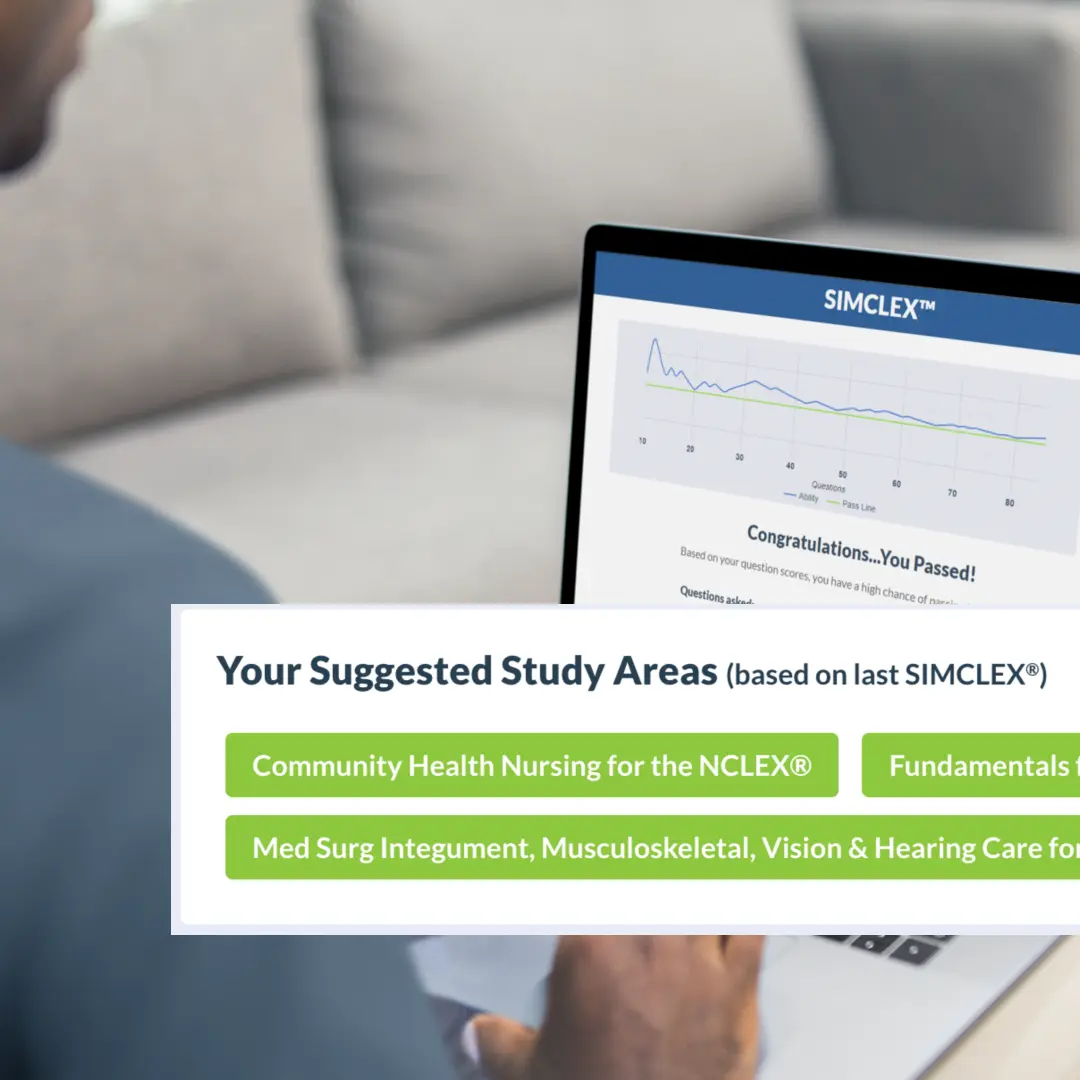
When you're ready for the full experience, SIMCLEX gives you adaptive testing, Next Gen questions, the whole nine yards. It's the closest thing to the real NCLEX you can get without actually taking NCLEX.
Use Visual Learning Tools (Your Brain Will Thank You)
Look, nursing is visual.
Anatomy? Visual.
Pathophysiology? Visual.
Procedures? Definitely visual.
So why are you trying to learn it from paragraphs of text?
Your brain processes images 60,000 times faster than text. That's not an exaggeration. That's actual science.
When I finally started using charts, diagrams, and mnemonics instead of just reading paragraphs, everything started clicking. Literally. Like 'OH, THAT'S how the heart works' kind of clicking.
We have 2,100+ visual study tools - cheat sheets, mnemonics, comparison charts. You can browse them by topic. Find what you need, download it, done.
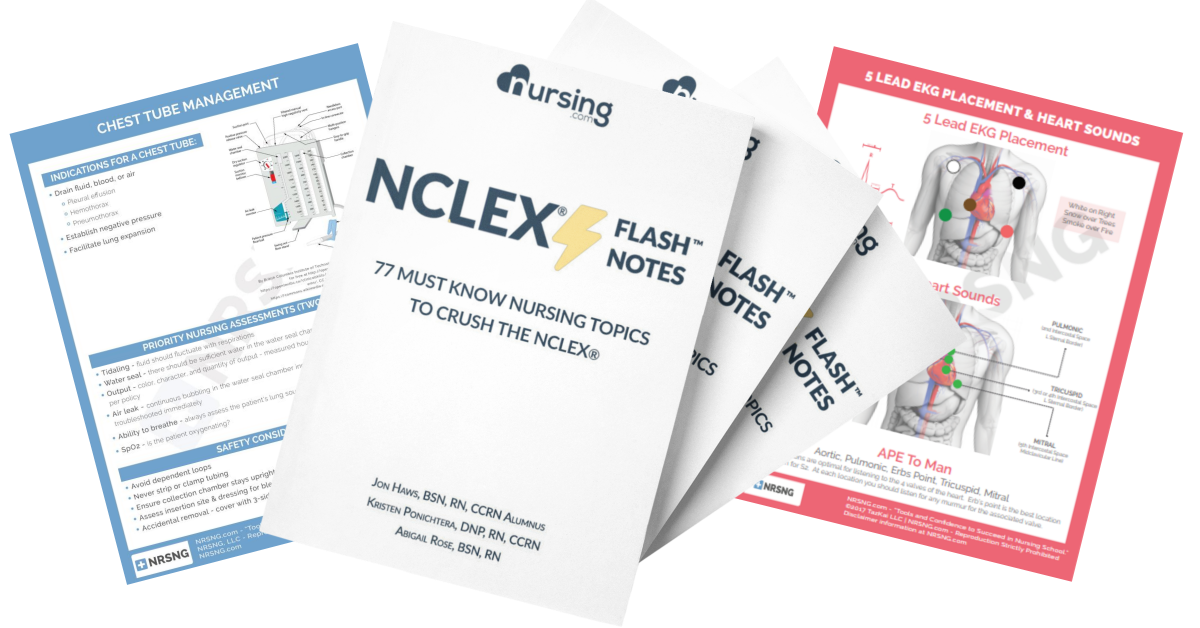
Or if you want something to get you started, download our free NCLEX Flash Notes. 77 pages of visual notes on core concepts. No fluff. Just the good stuff.
Stop Wasting Time on What You Already Know
Here's the biggest time-waster in nursing school: studying everything equally.
You know cardiac really well? Great. Stop reviewing cardiac.
You're shaky on neuro? That's where your study time should go.
But most students don't do this. They study everything equally. They spend just as much time reviewing stuff they already know as they do learning new material.
That's inefficient. You're wasting precious study time.
The rule should be: spend 80% of your study time on your weakest area.
This is where AI completely changed the game for me. Adaptive Brain AI tracks what you know and what you don't. It only shows you content you actually need to review. It's like having a study coach who knows your brain.
I'm not just saying this because the Lifetime price is going up Jan 17 - I'm saying it because it saved me probably 10+ hours a week. No exaggeration. Instead of reviewing everything, I only reviewed what I was weak in. Game changer.
If you're tired of wasting time, check out NURSING.com Academy while Lifetime is still $199 (or 5 payments of $39.99). After Jan 17, it goes to $499. But honestly, even at that price, the time savings alone would be worth it. When you're already stretched thin, getting 10 hours back per week? That's huge.
Your Study Strategy Matters More Than Your Study Time
Look, you can study 15 hours a week, the not-so-good way. Or you can study 5 hours a week the smart way.
I know which one I'd choose.
Active recall. Spaced repetition. NCLEX-style questions. Visual tools. Focus on weak spots. That's the formula.
It's not about studying more. It's about studying smarter.
Start with these strategies today. Not next week. Not when the exam is 3 days away. Today.
Your grades will thank you. Your stress levels will thank you. And honestly, your free time will thank you too.
You CAN do THIS. Now go study smart.
Resources Mentioned:
- Browse all lessons by topic
- Free cheatsheets and study guides
- 6,500+ practice questions (NPQ)
- Study Plan Wizard
- SIMCLEX - Full NCLEX Practice
- 2,100+ Visual Study Tools
.png?width=352&name=Best%20nursing%20education%20websites%20(1).png)